Can Redeveloping Vacant Land Reduce Neighborhood Violence?
In many cities, vacant lots are part of the everyday landscape. For people living nearby, these spaces can symbolize neglect and raise real concerns about safety. A new study published in the American Journal of Public Health (AJPH) examines what happens when vacant lots are redeveloped—and whether that change affects violence in nearby neighborhoods. The study was led by Nicole Asa, a fourth-year PhD candidate in the University of Washington Department of Epidemiology and first author on the research.
“Vacant lots are not just empty spaces—they shape how neighborhoods function and how neighbors consider their area safe or not,” Asa says. Using years of open datasets on Philadelphia crime rates, the researchers tracked more than 250 vacant lots over a 16-year period. The lots were vacant after abandoned houses were demolished, leaving empty parcels behind. Some were redeveloped into housing or business structures, while others remained vacant. “Philadelphia was chosen primarily because the city has a substantial number of vacant lots and developers actively developing them. On top of that, Philadelphia has extensive open-access datasets.” Using historical Google Street View imagery, the team identified when redevelopment occurred and compared yearly crime rates around redeveloped lots with those that remained vacant.
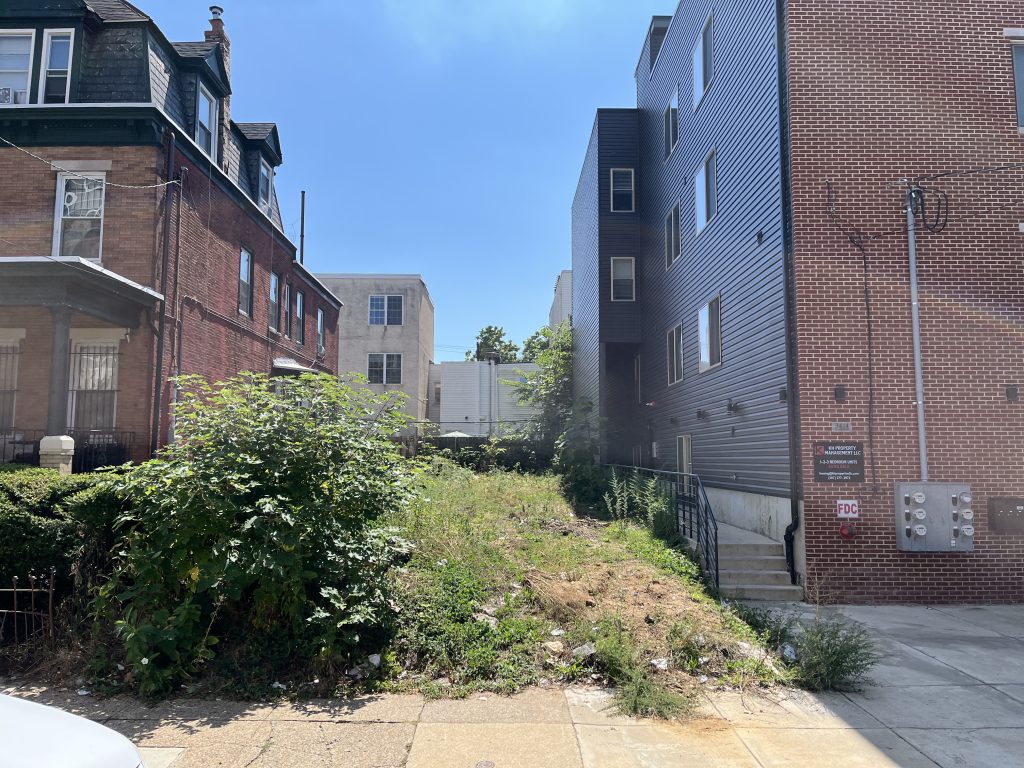
Most prior research on vacant lots has focused on “vacant lot greening,” which includes relatively low-cost efforts like mowing, planting trees, or turning empty land into community-managed spaces. This study examines a different approach where empty land is converted into housing or business structures. By focusing on redevelopment rather than greening alone, the study expands the understanding of how different built environment interventions may influence urban safety. The researchers found that when vacant lots were redeveloped into housing or businesses, nearby aggravated assaults and firearm-related aggravated assaults dropped by about 30 percent. Overall firearm violence also declined.
Asa pointed to several mechanisms that may explain the findings. “Placing a house on a lot physically restricts access to that space,” she says. “A lot that people were once able to enter is no longer physically accessible, so it can no longer be used for unwanted activities or firearm storage.” Redevelopment may also change how people interact with their surroundings. When you add a house, you’re potentially adding a new neighbor. There are more eyes on the street and fewer dark or secluded areas that are left unattended.
For residents, these changes matter. Assaults and gun violence shape whether people feel safe walking to work, letting their children play outside, or spending time with neighbors. Reductions in this kind of violence can meaningfully change how a community experiences daily life.
The study also addressed a common concern about redevelopment: that violence will simply move elsewhere. Critics often worry that investment in one block may push crime into surrounding areas. But the researchers conducted a spillover analysis and found no evidence that crime increased nearby after lots were redeveloped.
Not all redevelopment had the same impact. When vacant lots were only fenced off or converted into small permanent structures, reductions in violence were much weaker than when lots were redeveloped into housing or businesses. That distinction suggests that visible, meaningful investment may matter more than minimal physical changes. According to Nicole Asa, “Housing redevelopment signals a stronger level of investment in the neighborhood. It’s clearer that the city is investing in that area.”
The authors note several limitations. “One of the biggest unanswered questions is how different built environment interventions—especially redevelopment and vacant lot greening—compare to each other,” Asa says. “Understanding where each intervention works best, what factors influence their effectiveness, and how to choose between them within neighborhoods are important next steps.” The study also could not determine whether lots had been greened or maintained before redevelopment, which made it difficult to separate redevelopment effects from broader processes like gentrification.
Still, the findings add to growing evidence that violence is shaped by the environments people live in—and that changing those environments can be part of the solution. “Changing the physical environment can seem removed from crime prevention,” Asa notes. “But built environment interventions are really trying to address root causes of violence, which can have a lot of great impact, not just on crime reduction, but also on the feeling of safety in the neighborhood, mental health, and physical health.” For cities deciding how to use vacant land, the research offers a hopeful takeaway: investing in neighborhoods may help make communities safer.